Flutter vs React Native: Indian SMB Apps ke liye Practical Pick (Varanasi 2026)
Cross-platform MVP — UI consistency, hiring, Firebase & hardware integrations.

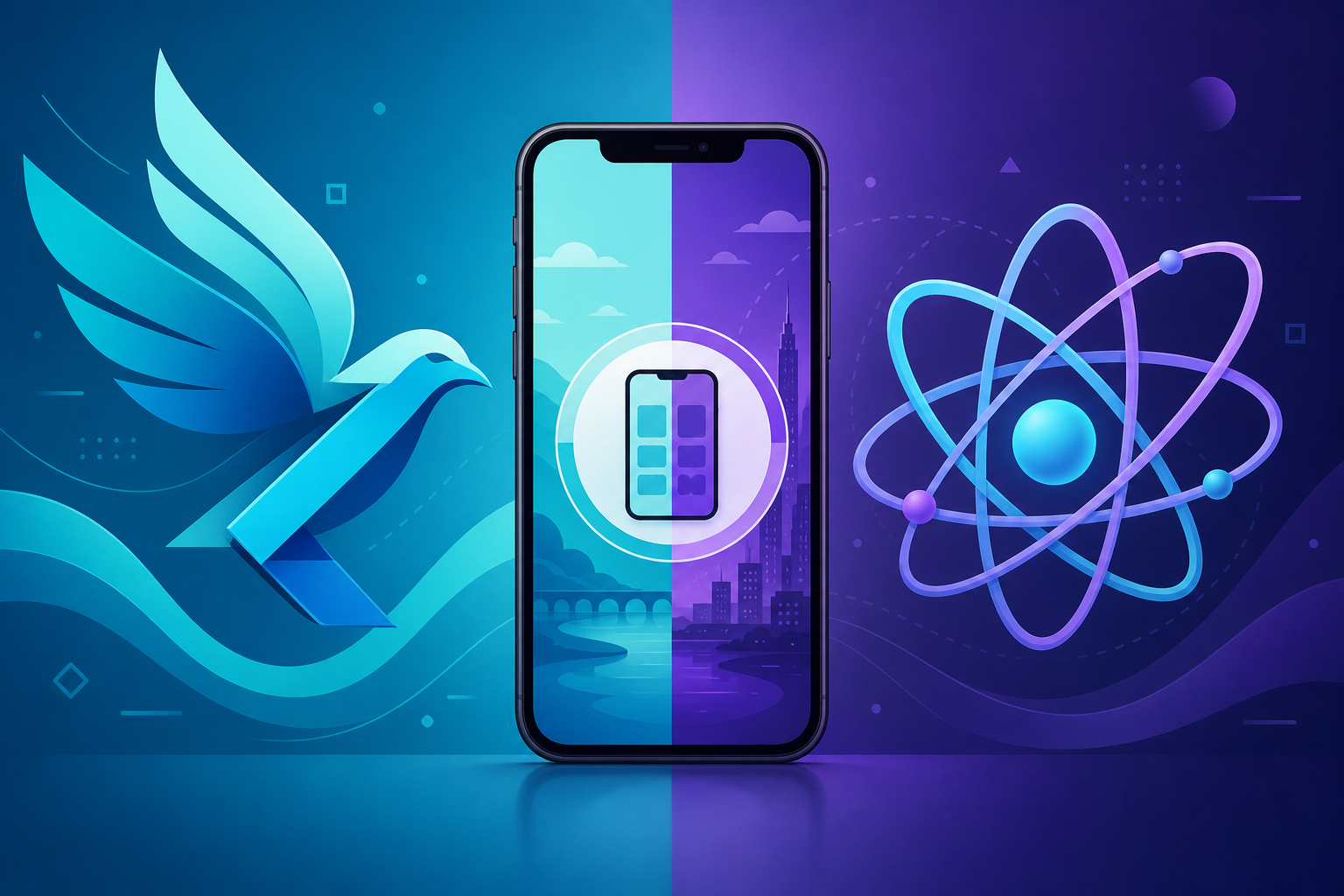
India ke chhote–medium businesses ke liye mobile app decision aksar emotional hoti hai — “humko Play Store par app chahiye”. Tech stack choose karna actually team + product workflow ka decision hai: Flutter aur React Native dono ek codebase se Android & iOS deliver karte hain, lekin philosophy alag hai. Is article mein seedhi bhasha mein compare karte hain taaki tum over‑engineer na karo aur right MVP pace pakdo.
Pehle samajho kab sirf website/PWA kaafi hai — hamara mobile app vs website vs PWA guide aur responsive site vs app article helpful rahenge. Idea phase clarity ke liye business idea → software guide padh sakte ho.
60 seconds — dono frameworks kya hain?
Flutter
Dart language + widget-based UI. Rendering engine khud pixels paint karta hai — isliye Android/iOS par UI behaviour predictable ho sakta hai jab designs custom ho.
React Native
JavaScript / TypeScript + native UI components tak bridge. Web React background wali teams ko onboarding asaan lag sakta hai.
SMB owners ke liye decision factors
- MVP timeline: team skill se zyada affect hota hai — JS team = RN leverage; fresh cross-platform squad = Flutter strong option.
- UI consistency: heavy custom dashboards / billing screens par Flutter ka single widget model often kam “platform drift” deta hai.
- Device features: Bluetooth printer, barcode, background tasks — maturity of plugins + thoda native layer; India mein POS flows often Android-first validate hote hain.
- Maintenance: OS updates, Play policy, dependency upgrades — budget mein quarterly release rakho.
Firebase + India-style backends
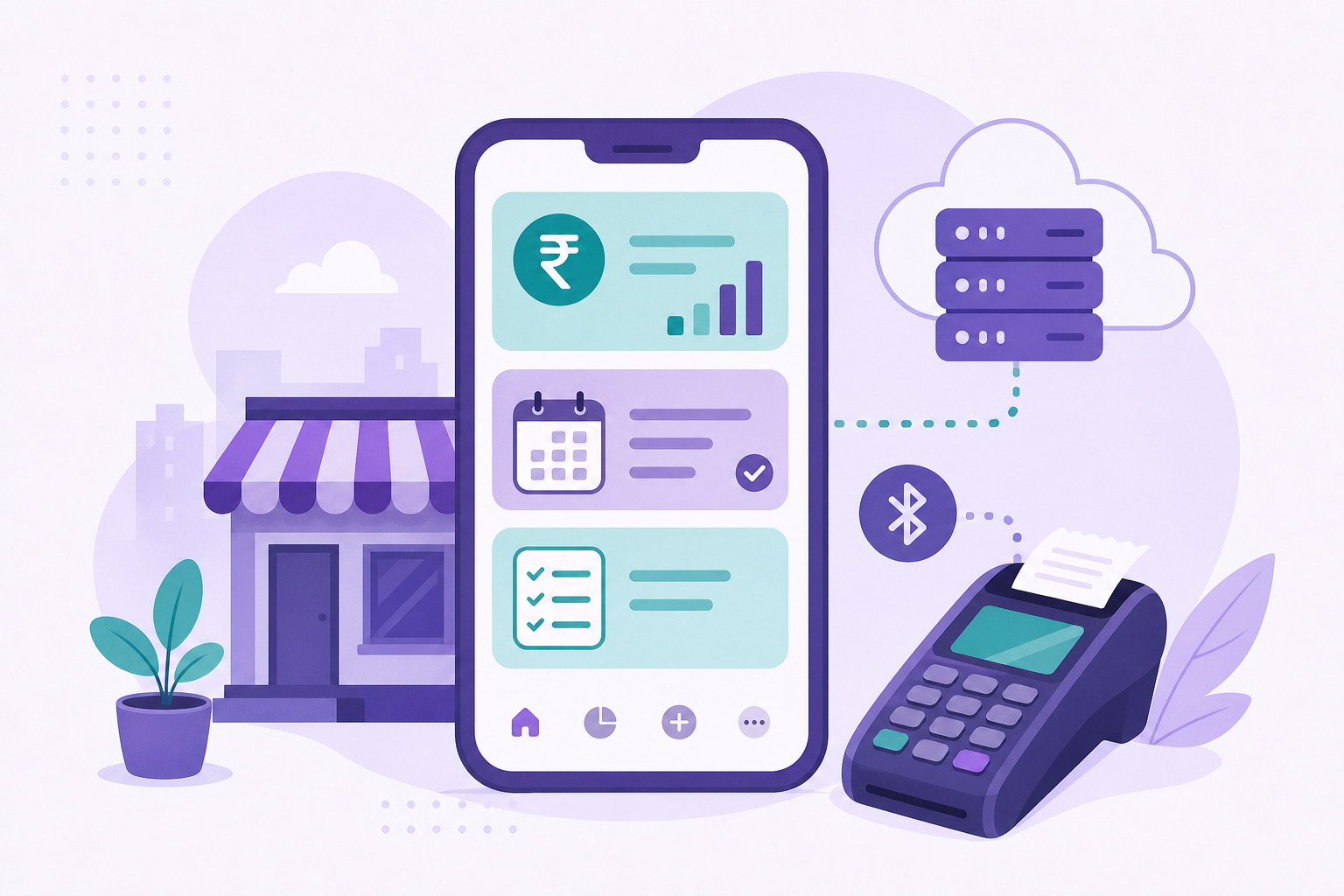
Dono stacks Firebase Auth, Firestore/Realtime DB, Cloud Functions, FCM ke saath comfortably integrate hote hain — chhote teams ke liye ye combo fast hai. Billing / GST / ERP deep integration ke liye kabhi‑kabhi Laravel / custom API + mobile client clean hota hai — overview software development section mein dekho.
Hardware example: POS / thermal printers
Operational apps (kirana billing, restaurant KOT, warehouse scan) mein Bluetooth ESC/POS printers realistic requirement hai. Humne Flutter + Firebase flow production mein deliver kiya hai — detail ke liye Mindset Media POS case study dekho. React Native par bhi ye sab possible hai; plugin choice aur QA cycles par depend karta hai.
Kab Flutter lean karna sensible hai?
- Custom UI heavy dashboards, offline-first queues, unified Android+iOS visuals.
- Dart/Flutter ecosystem tumhari agency/partner confidently maintain karti ho.
- Hardware workflows validated primarily on Android fleet.
Kab React Native lean karna sensible hai?
- Pehle se React web codebase / developers bench par hain.
- Specific RN npm ecosystem packages tumhari features ko accelerate karte hain.
- Organisation JS toolchain (ESLint, CI, mono-repo) ready hai.
Performance — oversimplify mat karna
Dono frameworks mature apps production mein chala sakte hain. Bottlenecks aksar framework se kam architecture mein hote hain: unoptimised lists, giant images, blocking main thread, ya naadan state management. Performance goal ke liye profiling + sensible release discipline lagti hai — “magic framework” nahi.

FAQs
Neeche common engineering + business doubts.

WhatsApp, email or a call — pick what is easy.
Conclusion
Framework religion mat lo — workflow + team fit lo. SMB apps survive on clear scope, stable releases, aur honest hardware testing. Chahe Flutter ho ya React Native, tumhe chahiye partner jo MVP ko production-grade discipline se ship kare.
“Right stack = jo tumhari team maintain kar sake + jo tumhare users ke phones par reliably chale.”
Contact par use-case likho — ya WhatsApp. Explore mobile application services.