Shopify vs Custom Website Development: Which Is Better? (Varanasi 2026)

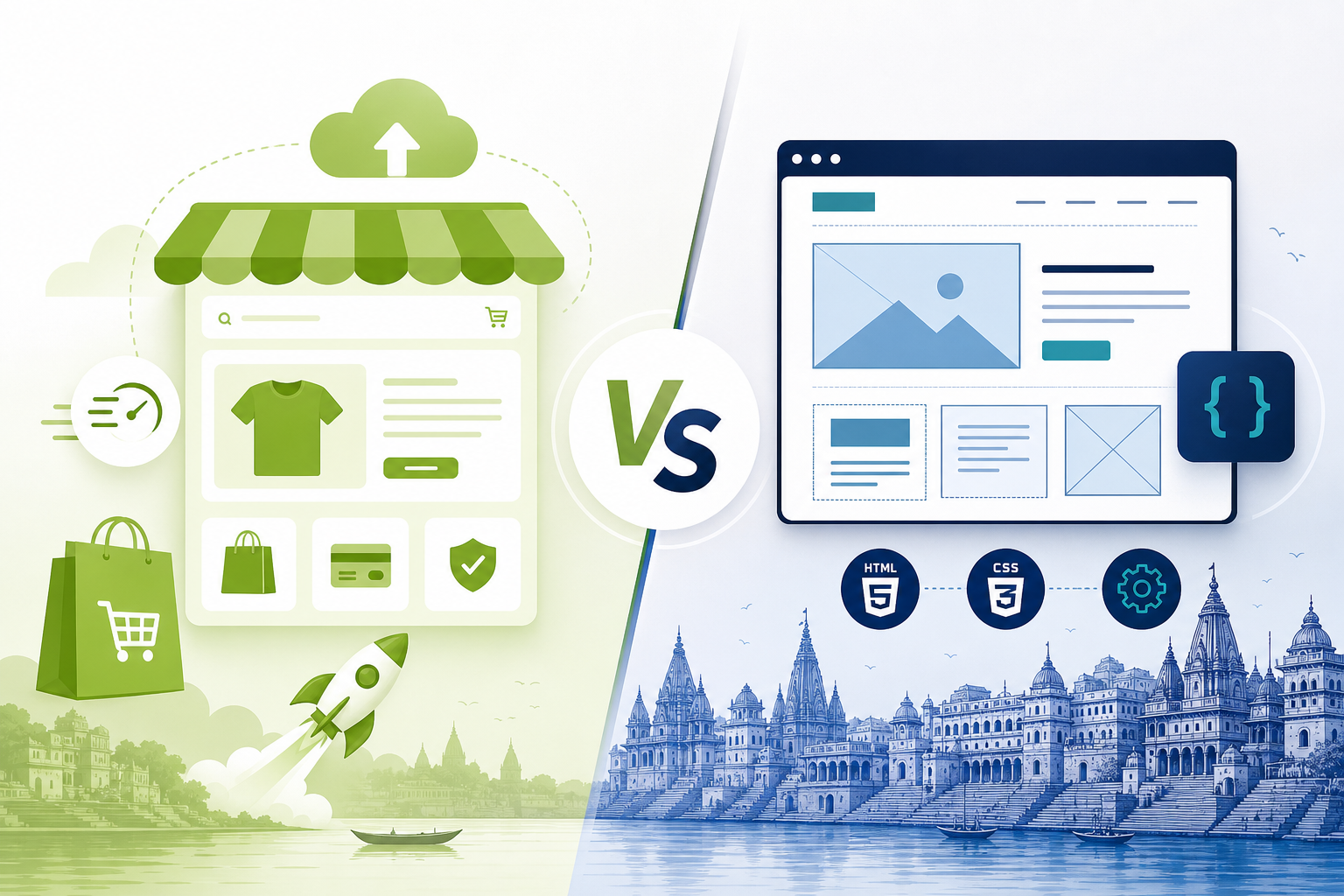
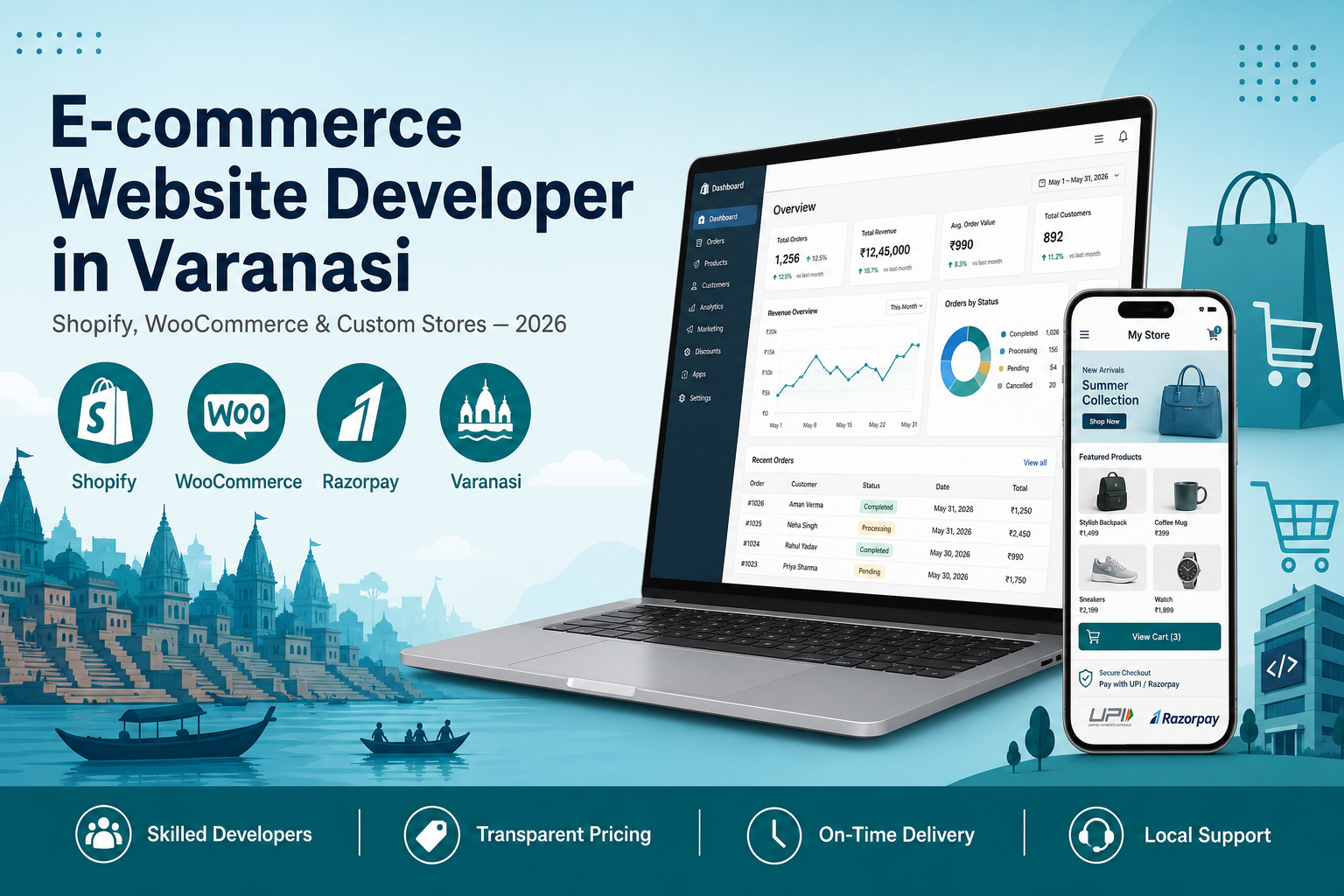
Shopify is a global SaaS platform — you get templates, hosting, and checkout in one place. Custom website development means your branding, HTML/CSS structure, and integrations are built around your business rules. Both can be the “right” choice — it depends on context: how fast you need to launch, and how much freedom you want over design and backend logic.
Where Shopify is the practical winner
- Your catalogue is ready and you want online checkout live quickly.
- Your team is non-technical and can manage a SaaS dashboard day to day.
- International themes and the app ecosystem match what you expect.
Where custom development fits better
- Unique funnel: flows like bookings + EMI + dealer portals that become painful to bolt onto themes and plugins.
- SEO & performance control: core HTML/CSS/JS lives in your codebase — without unnecessary theme baggage (custom vs template).
- Total cost: Shopify monthly fees + premium apps + transaction fees versus a one-time custom build + affordable hosting — model both on a spreadsheet for a longer timeframe.
- India workflows: tailoring GST invoicing patterns, WhatsApp-first enquiries, and COD-heavy behaviour on the frontend and backend.
- Ownership: data and codebase on your hosting — less vendor lock-in.
The “custom means slow” myth
A solid agency phases delivery — MVP storefront first, then inventory and automation. Read our Varanasi e-commerce guide and business website guide.
Hybrid option
Sometimes a Shopify storefront plus a custom Laravel landing or marketing site — or Shopify checkout only — makes sense once requirements are clear.
FAQs
- Is Shopify always the best?
No — if you need strong differentiation and deep integrations, custom often delivers better ROI. - What about SEO on Shopify?
It can work well, but markup and control are sometimes limited by templates and apps compared with bespoke HTML. - Budget?
Short term, Shopify has predictable recurring costs; custom has higher upfront cost but often lower ongoing fees. - Want to discuss?
Contact or WhatsApp — we will give a realistic recommendation.
Conclusion
Shopify is convenience. Custom development is leverage. Your catalogue complexity and appetite for recurring SaaS fees decide which mix wins.
Free consult · explore website development; if you need a full ERP or POS stack, see custom software.